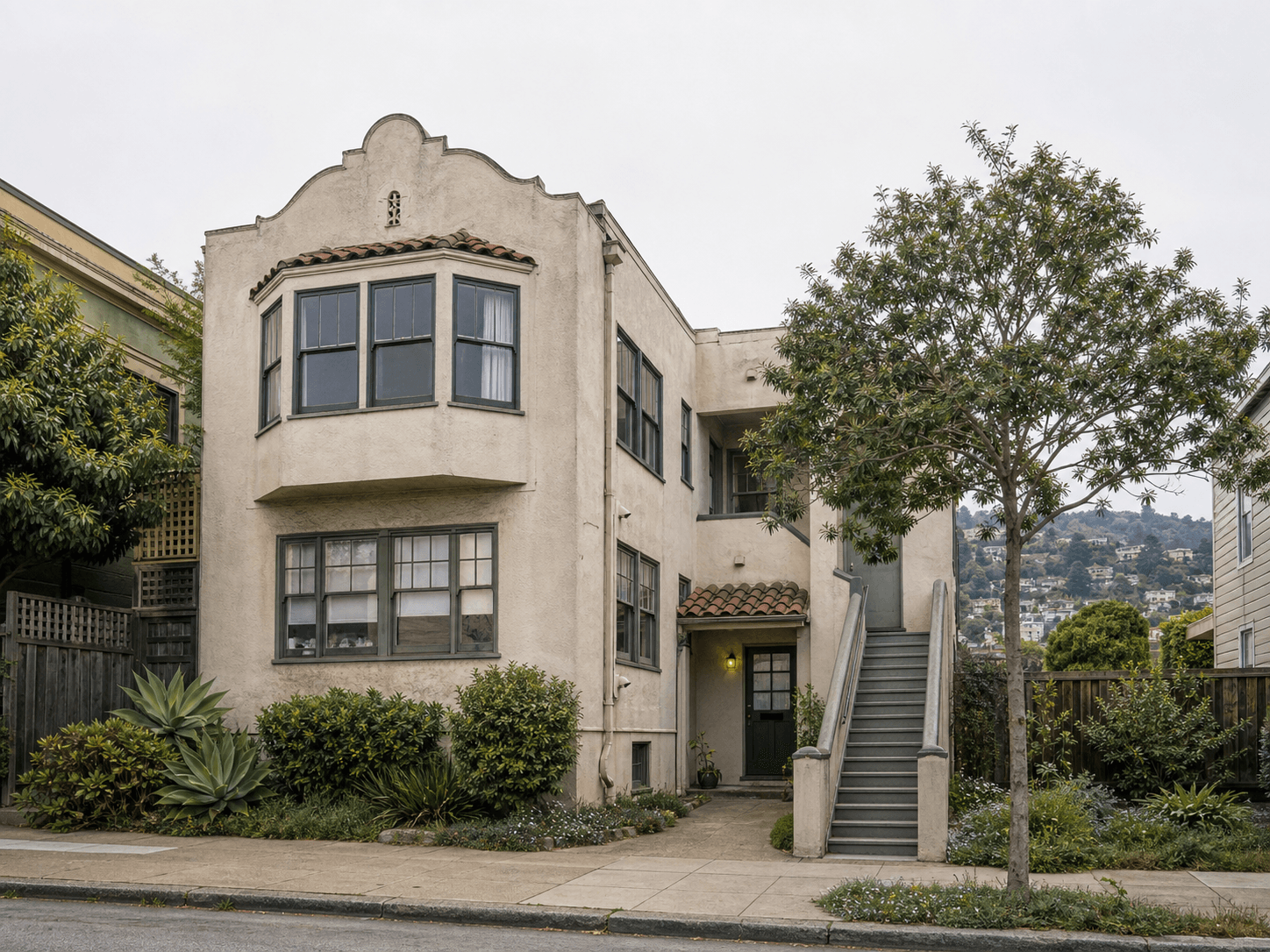
An older Oakland unit can look complete and still lack a legal permit record. Before commissioning plans or opening walls, establish when the unit was created, what the City recognizes on the parcel, and which legalization path may apply.
The short version
- Confirm the unit's construction and occupancy date with records that you can submit.
- Check whether Oakland's local amnesty, enforcement delay, or Government Code section 66332 may apply.
- Research the legal unit count, zoning, S-9 status, protected trees, and creek conditions before finalizing a design.
- Document exits, windows, ceiling heights, utilities, structural conditions, and independent dwelling facilities.
- Complete planning, building, corrections, and inspections against the approved scope.
Oakland has three possible paths for an older unit
The City's unpermitted ADU legalization guidance describes local planning amnesty, a building-code enforcement delay, and a state legalization route. They overlap, but they are not interchangeable.
Oakland planning amnesty
Oakland says local planning amnesty may apply when an ADU or JADU was built and occupied before January 1, 2021. The owner must be able to prove the date, the application must be submitted before January 1, 2030, and the City's current criteria exclude properties in the S-9 Fire Safety Protection Combining Zone. The lot must also remain within the allowed number of ADUs.
Planning amnesty can address local standards such as setbacks, height, size, lot coverage, or location. It does not waive health and safety requirements, building permits, or inspections.
Oakland enforcement delay
For qualifying units created before January 1, 2020, Oakland describes a temporary delay in building-code enforcement while violations are corrected. Immediate health and safety hazards do not receive that protection. An enforcement delay gives an owner time to correct the unit. It is not final approval.
California Government Code section 66332
Government Code section 66332 applies to certain unpermitted ADUs and JADUs constructed before January 1, 2020. A local agency generally may not deny legalization solely because the older unit violates building standards unrelated to the health and safety conditions in Health and Safety Code section 17920.3, or because it fails to comply with current ADU ordinances.
The law does not require approval of a substandard building. It allows an inspection for health and safety compliance, requires permits needed to correct those conditions, and limits impact fees and connection or capacity charges except in specified utility circumstances. Oakland uses its own AB 2533 checklist for this route.
Start with records, not assumptions
A listing may call the space an in-law unit, while tax records and building permits show something else. The strategy depends on the City's recognized record, not the name used in a lease or sales brochure.
Collect these items before design work expands:
- The current permit and planning history for the parcel.
- Evidence of when the unit was built or converted and first occupied.
- The legal number and type of existing dwelling units.
- A measured plan and photographs of rooms, exits, utilities, framing, and work that may later be concealed.
- Any notices of violation, prior applications, permits, or inspection records.
Planning and building review answer different questions
Planning determines whether the proposed ADU category and site arrangement fit the applicable rules. Building review addresses structural safety, fire and life safety, egress, plumbing, mechanical systems, electrical work, and energy compliance.
For a multifamily property, Oakland identifies different categories depending on whether the project converts nonhabitable space inside the main building, converts or rebuilds a detached structure, or adds a unit attached to the primary building. The City's multifamily ADU guide lists site plans, floor plans, elevations, sections, tree information, and structural calculations among the materials that may apply.
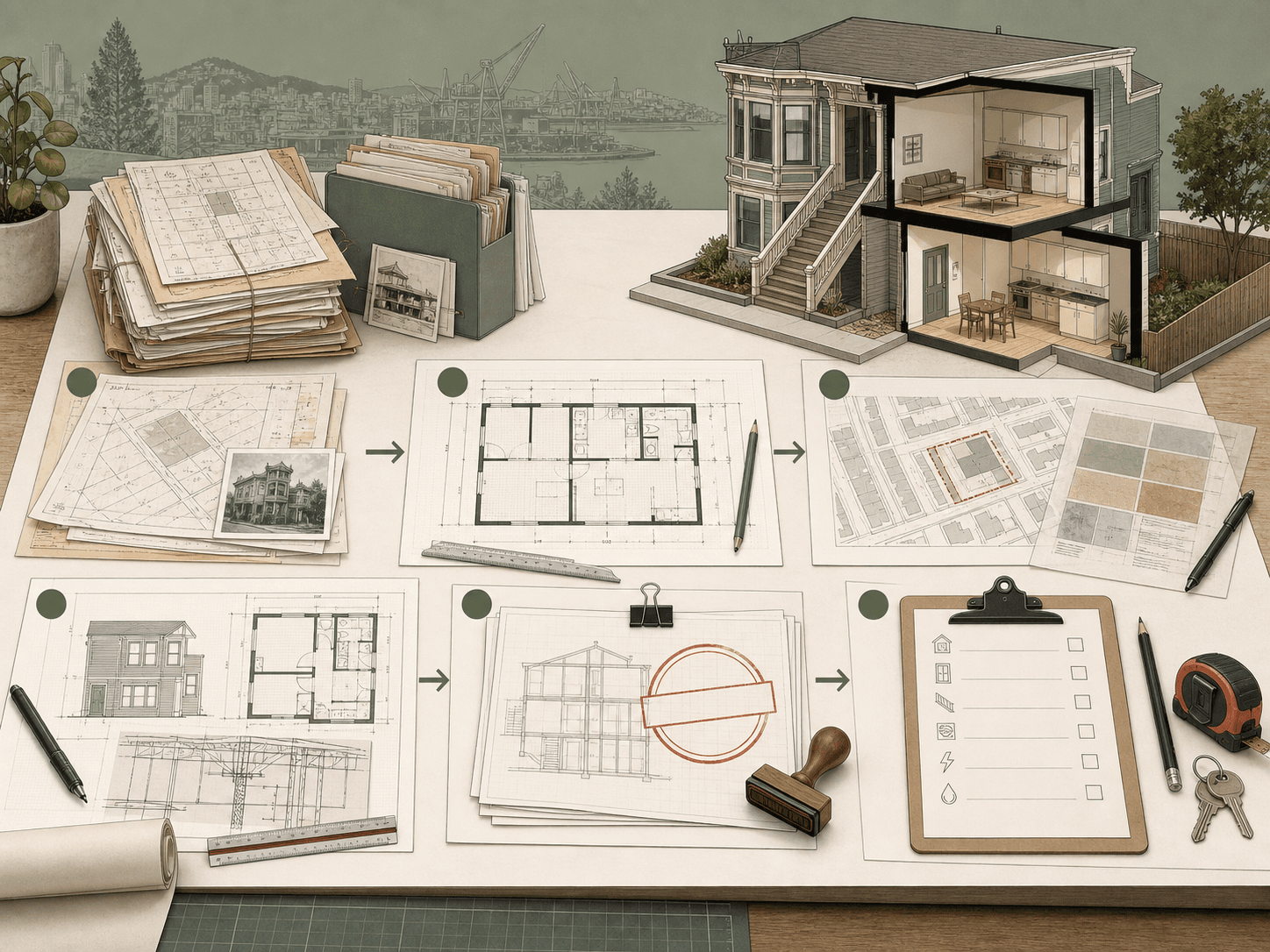
The working sequence is usually:
- Research the parcel and screen the legalization programs.
- Prepare the zoning worksheet and planning materials for the selected route.
- Prepare a building permit set showing existing conditions and proposed corrections.
- Respond to plan-check comments and separate approvals.
- Obtain permits, complete required work, and schedule inspections.
Expect the City to verify the unit as a dwelling
A legal ADU needs complete independent living facilities. Oakland's current legalization checklist calls for dimensioned site and floor plans showing buildings, parking areas, ceiling heights, window types and dimensions, and each room's use. Depending on the work, the permit set may also need demolition plans, sections, framing and foundation plans, details, calculations, energy documents, and utility information.
The City warns that some construction may need to be exposed so an inspector can verify compliance. Document first, then coordinate a targeted investigation. Opening everything too early can destroy useful evidence or create repair work outside the planned scope.
Oakland identifies serious structural deterioration, inadequate direct exit or emergency escape from sleeping rooms, certain gas appliances in sleeping rooms, and nonhabitable living space as conditions requiring immediate correction under its amnesty program. The actual correction depends on the unit and the applicable code.
Screen S-9, protected trees, and creeks before finalizing plans
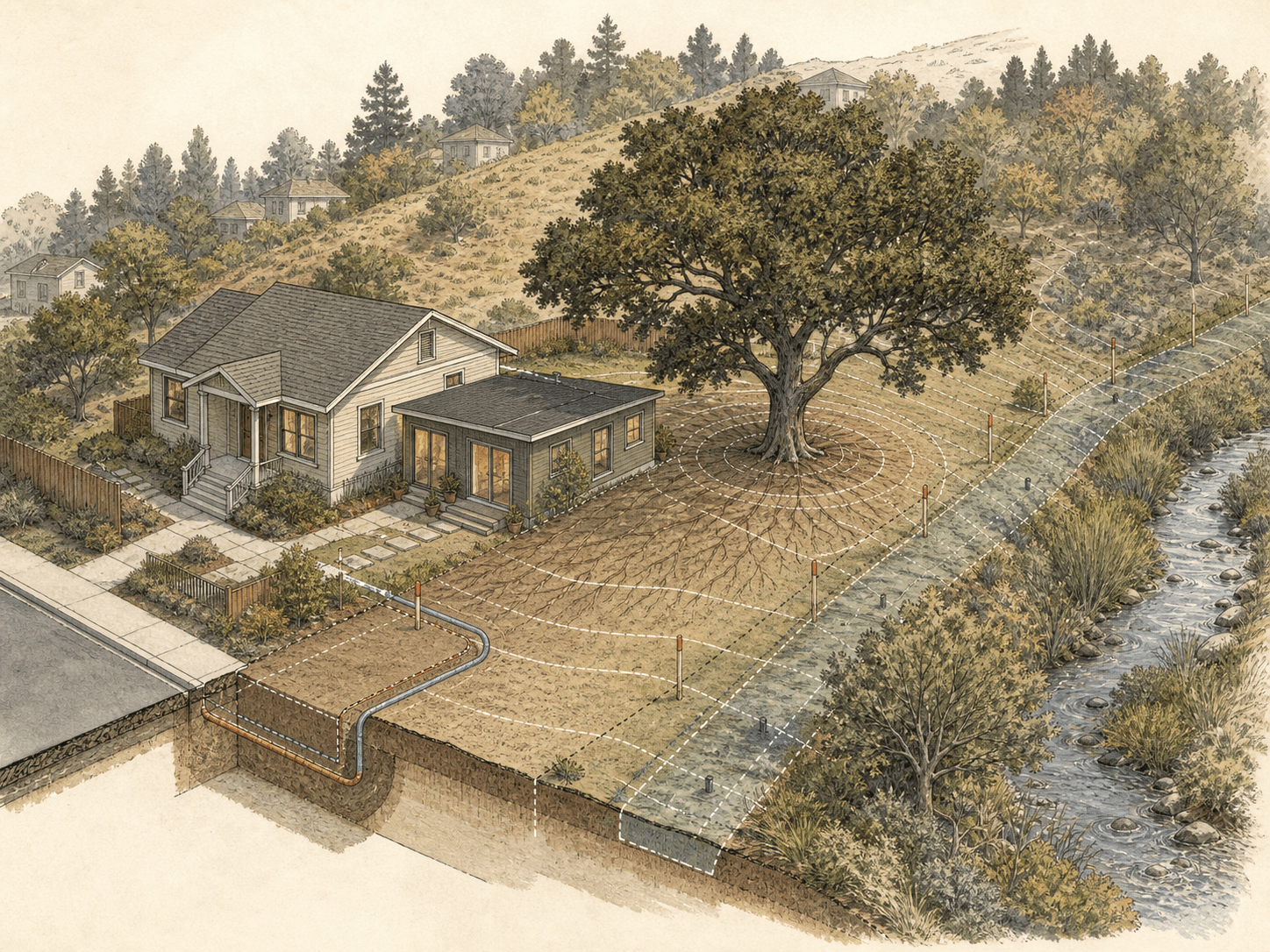
An interior conversion can still trigger site review. New windows, utility trenches, exterior stairs, foundations, grading, or equipment may bring other Oakland rules into the project.
S-9 fire zone
Oakland's current local amnesty criteria exclude ADUs in the S-9 Fire Safety Protection Combining Zone. Check the parcel instead of assuming that every hillside address has the same status.
Protected trees
Oakland's current development review application states that construction activity within 10 feet of a protected tree can require a tree preservation or removal permit, even if the tree remains or stands on neighboring property. A driveway, deck, excavation route, grading area, or construction access path can matter.
Creeks
Oakland requires a Creek Protection Permit for work on creekside property. Its Creek Protection Permit page describes categories based on the location and effect of the work. Some exterior projects require a Creek Protection Plan, and the closest or higher-impact work can require a hydrology report. Do not infer creek status from whether water is visible.
Published review times are planning inputs, not promises
Oakland's current turnaround page lists 10 to 20 business days for ADU planning review. Its building table varies by project and building type, while tree or creek review can take substantially longer. These estimates apply to complete applications and describe City processing, not the whole project. They do not include records research, measurements, consultant work, corrections, construction, or reinspection.
A practical pre-design checklist
- What does Oakland currently recognize on the parcel?
- Can you document when the unit was created and first occupied?
- Which local or state legalization path appears to apply?
- Is the property in S-9 or on creekside property?
- Are protected trees close to exterior work or construction access?
- Does the space have workable exits, dwelling facilities, and utility arrangements?
- What concealed work may need selective exposure?
- Which drawings, calculations, surveys, or outside approvals are likely to be required?
Cecilia Home's Oakland ADU design and permit service covers existing-condition drawings, site-specific design, engineering coordination, and permit support. For a broader scope, the building permit service explains how plan preparation and agency responses fit together.
Frequently asked questions
Can Oakland legalize an ADU that was built without permits?
Potentially. Oakland currently provides local amnesty and enforcement-delay routes for qualifying older units. Government Code section 66332 also provides a state path for certain ADUs or JADUs built before January 1, 2020. Eligibility depends on dates, records, site conditions, health and safety findings, and the selected program.
Does amnesty mean the unit can stay exactly as it is?
No. Oakland's planning amnesty can waive certain planning violations, but building permits, health and safety corrections, inspections, and final approval still apply. Immediate hazards must be corrected.
Should I expose walls before submitting plans?
Not automatically. Document the existing condition first and coordinate a targeted investigation. The City may require concealed work to be exposed for inspection, but opening everything too early can erase evidence and expand the construction scope.
How long will legalization take?
There is no universal duration. Oakland publishes estimates for complete applications, but records research, site constraints, consultant work, correction cycles, construction, and inspections all affect the total schedule.
Can I use an Oakland pre-approved ADU plan?
A pre-approved plan may help with a compatible new detached design, but it does not replace site-specific review. An older unpermitted conversion still needs drawings and corrections that describe the existing unit.
This article provides general educational information. It is not legal advice, a code determination, or a promise that a specific unit qualifies for amnesty or approval. Confirm the current path with the City of Oakland and the qualified professionals responsible for the project.