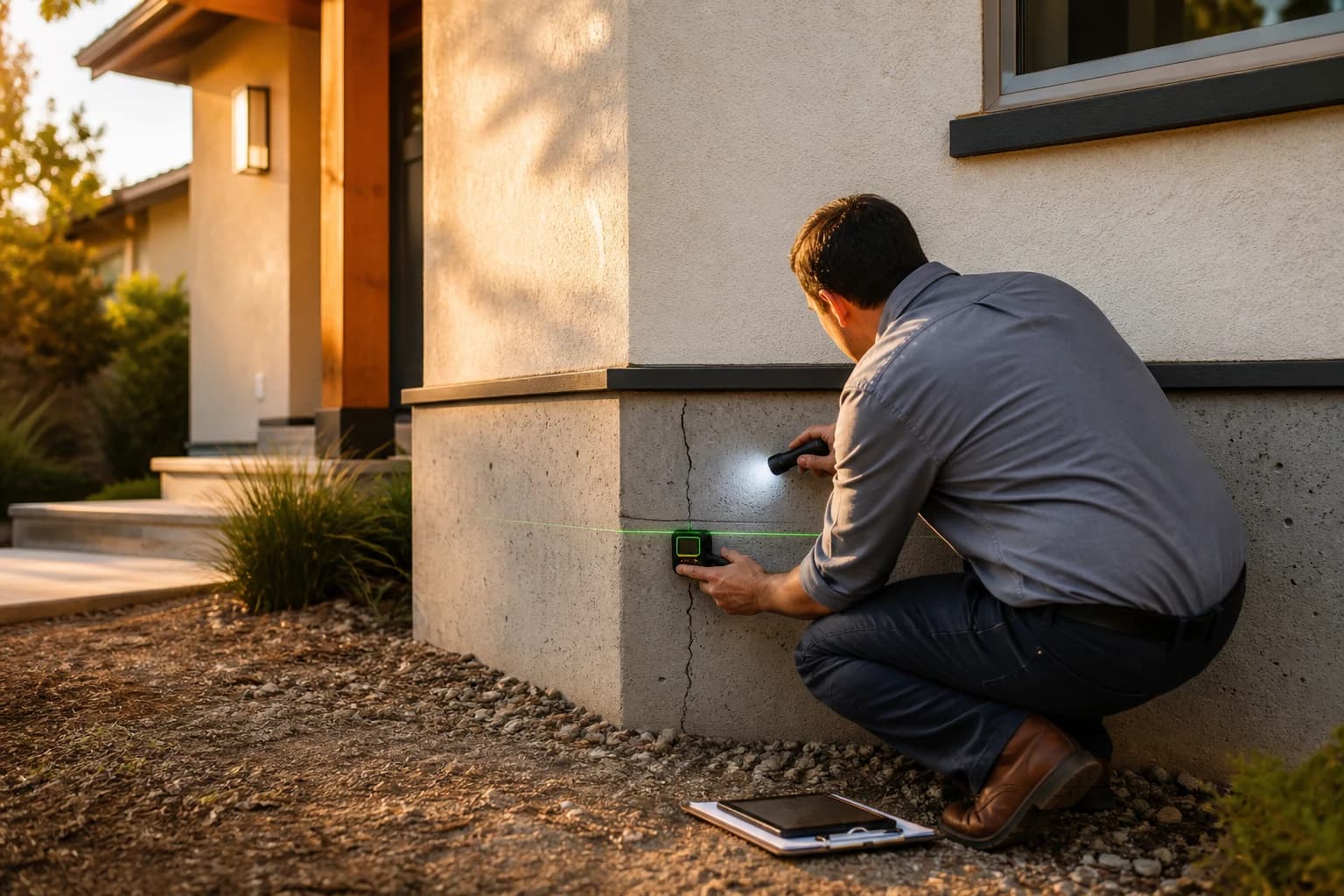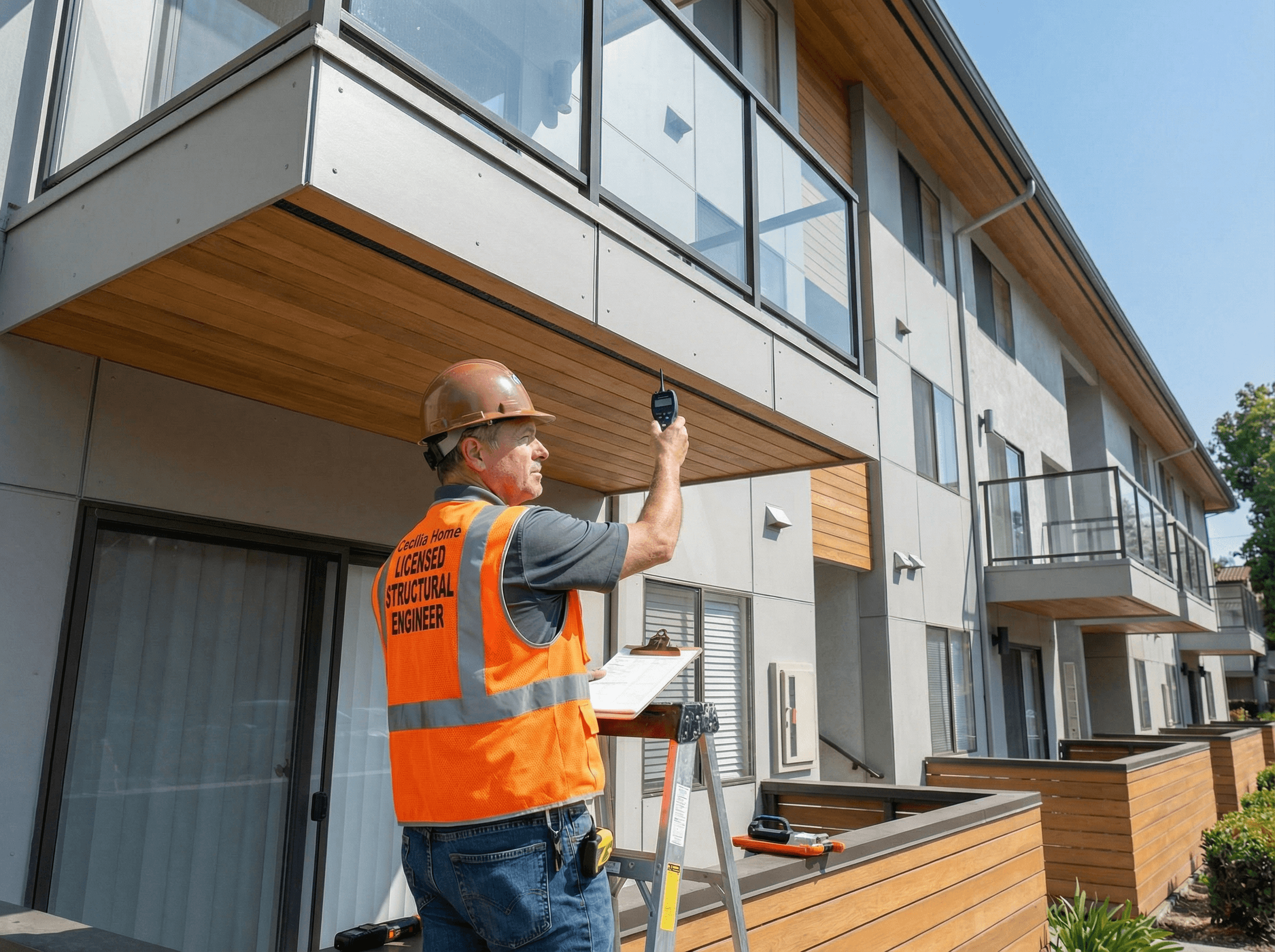
California's first statewide deadline for many SB 721 balcony inspections passed on January 1, 2026. For a covered apartment building, the practical question is now whether the owner has a qualified inspection, a usable report, and a response plan that matches the findings and local requirements.
The short version
- Confirm whether the building and each exterior elevated element meet the statutory definitions.
- Hire an inspector from one of the professional categories listed in Health and Safety Code section 17973.
- Inspect at least 15 percent of each qualifying element type and obtain a signed or stamped report.
- Restrict access and take preventive measures immediately when a finding presents an immediate threat.
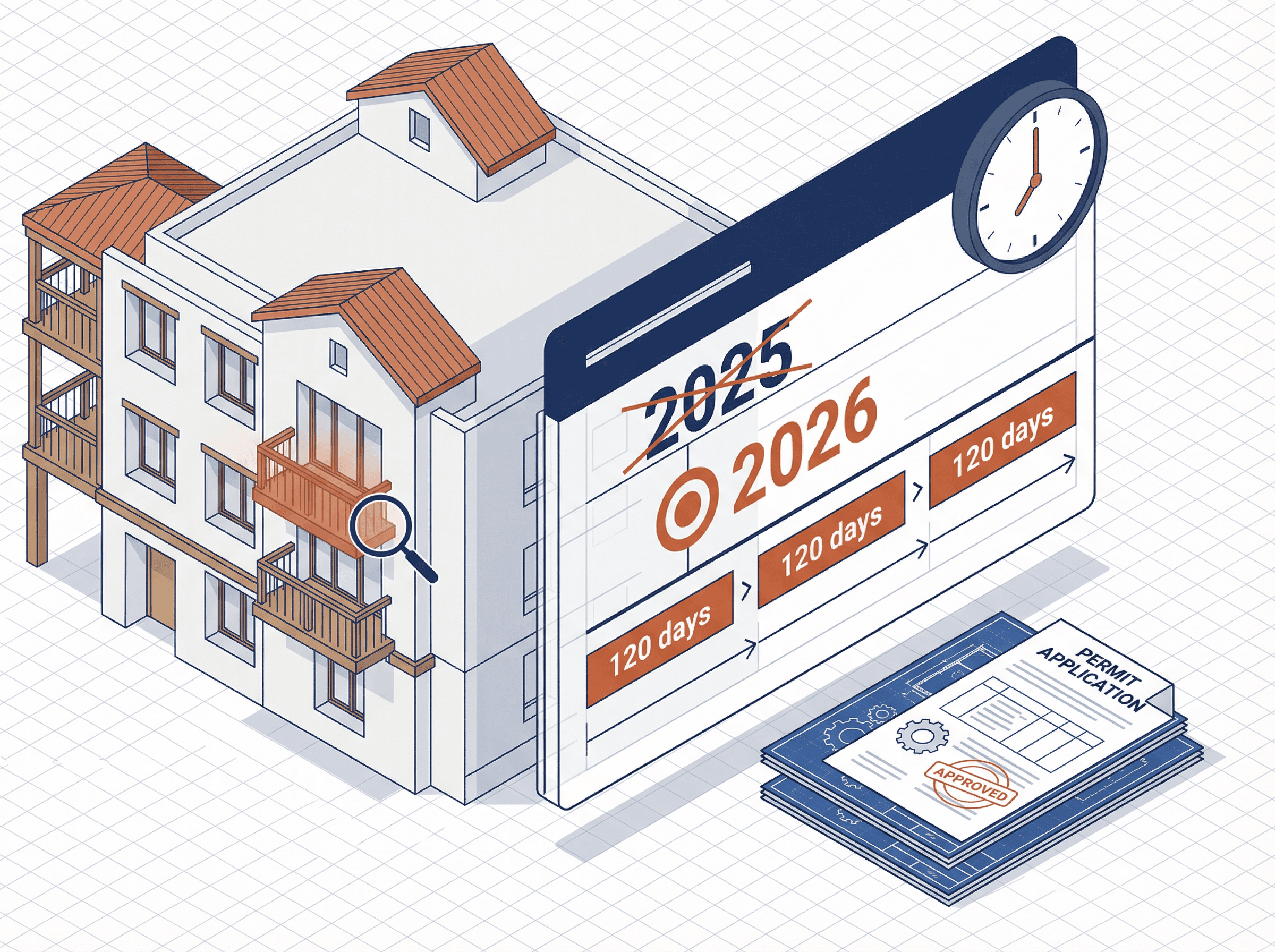
- For non-emergency corrective work, apply for a permit within 120 days after receiving the report and complete repairs within 120 days after permit approval, unless the local agency grants an extension.
What SB 721 covers
The controlling rule is Health and Safety Code section 17973. It applies to buildings containing three or more multifamily dwelling units when they have qualifying exterior elevated elements with load-bearing components.
A covered exterior elevated element must:
- extend beyond an exterior wall of the building;
- have a walking surface more than six feet above ground;
- be designed for human occupancy or use; and
- rely wholly or substantially on wood or wood-based products for structural support or stability.
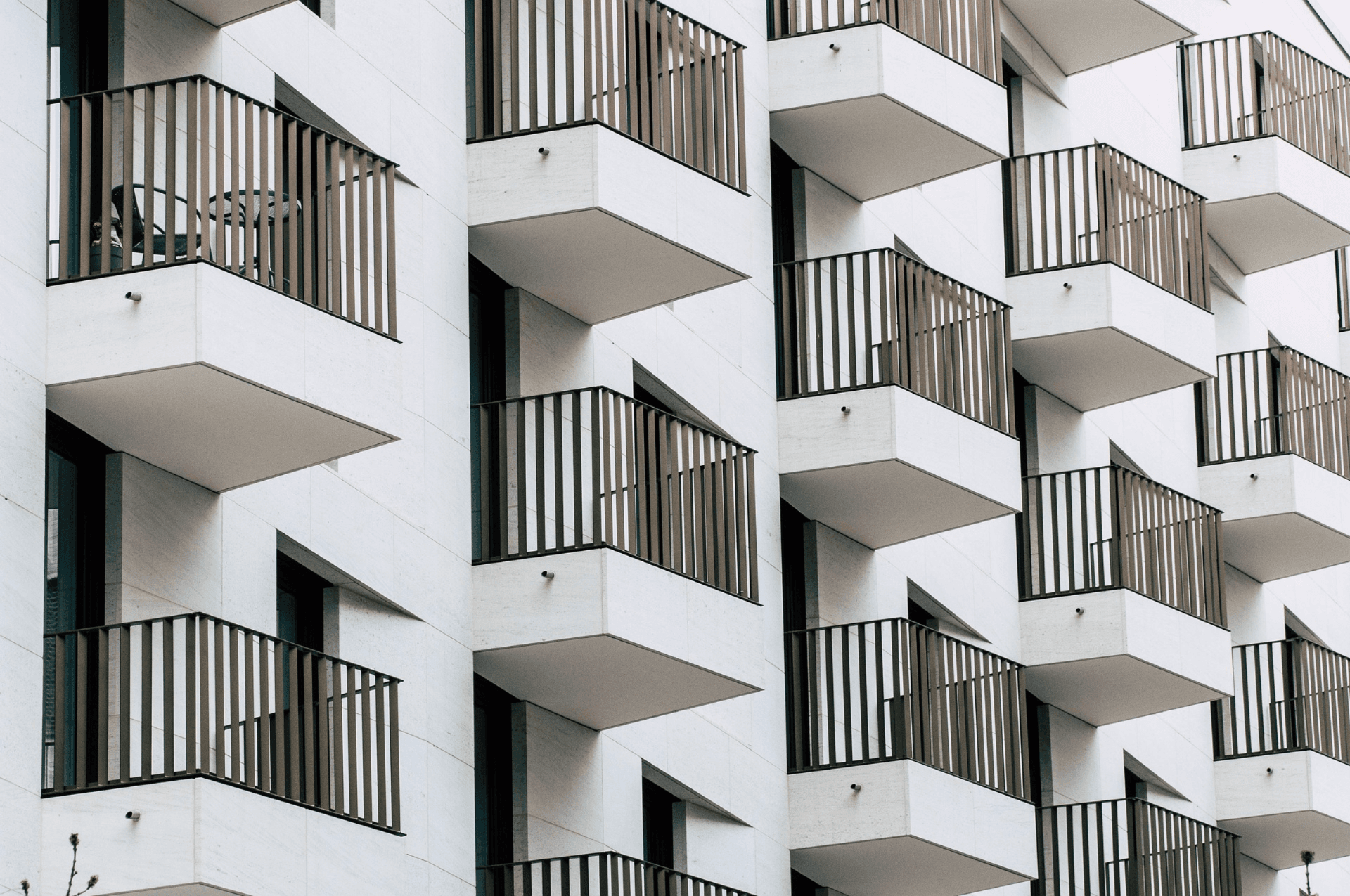
The definition names balconies, decks, porches, stairways, walkways, and entry structures, including their supports and railings. Associated waterproofing elements include flashings, membranes, coatings, and sealants that protect the load-bearing components from water.
Common interest developments, as defined in Civil Code section 4100, are excluded from section 17973. A condominium association may instead have obligations under Civil Code section 5551. An exemption from one statute should not be treated as proof that no inspection rule applies.
The January 1, 2026 deadline has passed
The Legislature originally set January 1, 2025 as the first deadline. AB 2579 extended it to January 1, 2026. Covered existing buildings generally return to the cycle by January 1 every six years.
For a building permit application submitted on or after January 1, 2019, the first inspection is due no later than six years after the local jurisdiction issues the certificate of occupancy.
The state statute does not provide a general automatic grace period after January 1, 2026. It also allows cities and counties to impose stricter requirements. A past-due owner should confirm the current local process and arrange a qualified inspection promptly. Merely scheduling one does not erase prior noncompliance or guarantee relief from local enforcement.
Who may perform the inspection
Section 17973 allows:
- a licensed architect;
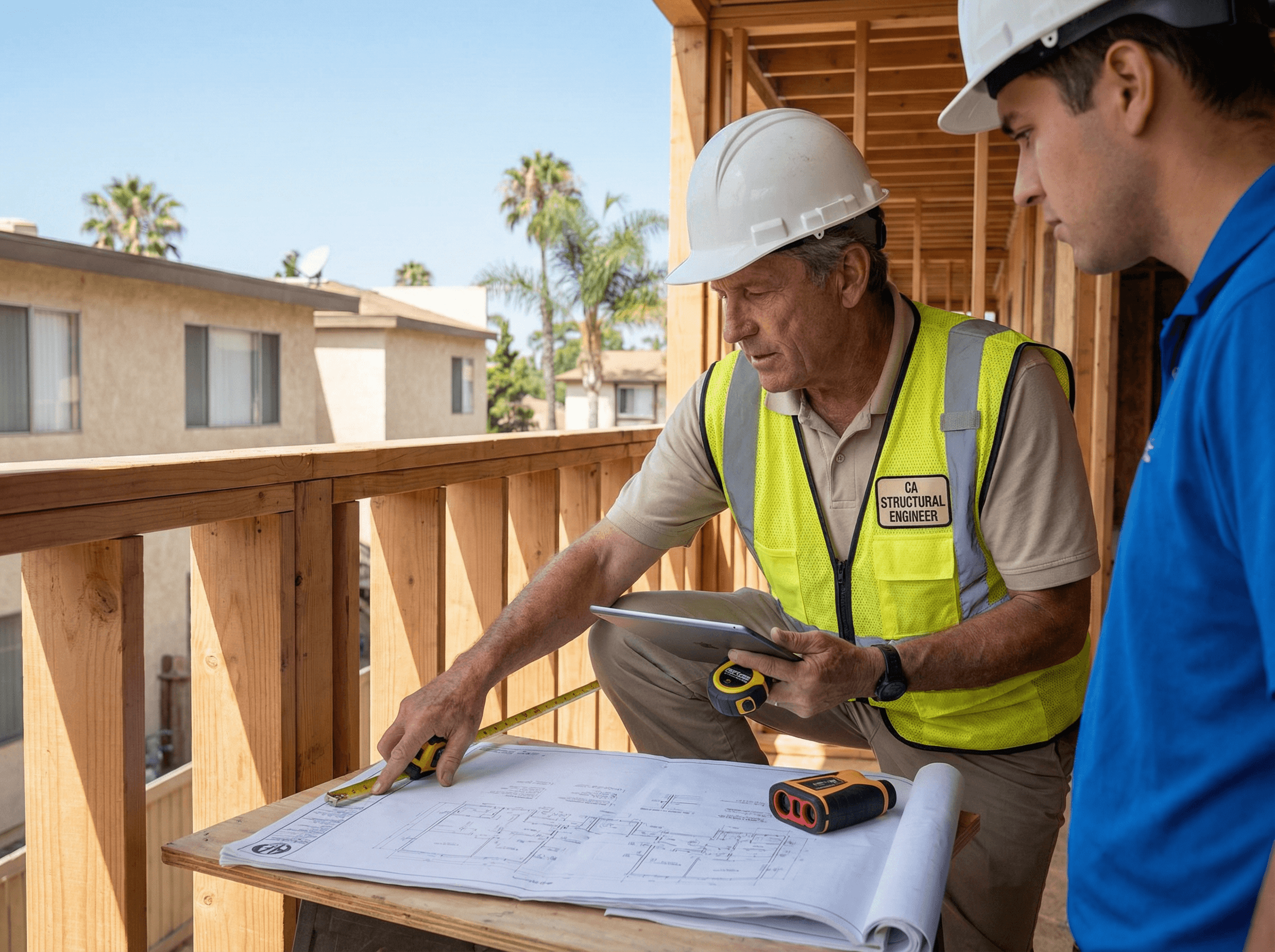
- a licensed civil engineer or structural engineer;
- a contractor holding an A, B, or C-5 license with at least five years of qualifying experience constructing multistory wood-frame buildings; or
- a certified building inspector or building official recognized by the local jurisdiction.
The inspector cannot be employed by the local jurisdiction while performing the inspection. The building owner hires the person or business.
What the inspection and report must accomplish
The inspector first identifies each type of exterior elevated element that could threaten occupant safety if defective, decayed, or deteriorated. At least 15 percent of each type must be inspected. A property with different balcony, stair, walkway, or entry configurations cannot be reduced to one undifferentiated sample.
The evaluation addresses load-bearing components and associated waterproofing. The law permits direct visual examination or a comparable method that allows performance to be evaluated. Access, finishes, moisture exposure, and observed distress can affect whether visual review is enough or whether the inspector recommends more investigation.
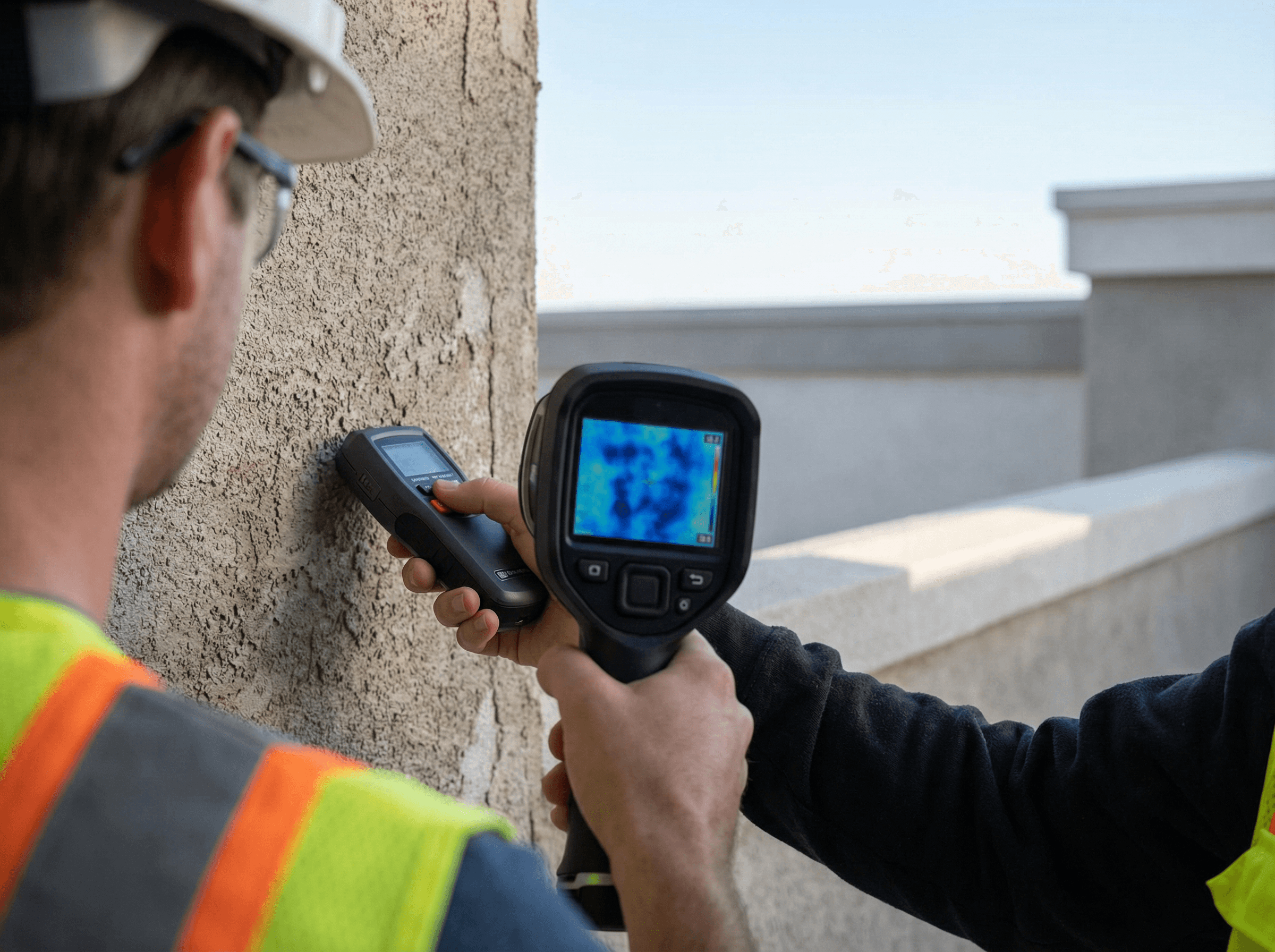
Within 45 days after completing the inspection, the inspector must present the owner or designated agent with a signed or stamped written report. It must include photographs, test results, and enough narrative to establish a baseline for later inspections. The evaluation addresses current condition, expected future performance and projected service life, and any recommended further inspection.
Owners must keep the reports in the building's permanent records for at least two inspection cycles and deliver them to a buyer at a later sale. Subsequent reports incorporate prior reports and the locations previously inspected.
Emergency and non-emergency repairs follow different paths
Immediate threat
When the inspector advises that an element presents an immediate threat, or that access restrictions, emergency repairs, or shoring are necessary, the owner must take the required preventive measures immediately. Preventing occupant access until emergency repairs can be completed satisfies that immediate duty.
The inspector must provide a copy of a report with those findings to the owner and local enforcement agency within 15 days after the report is completed. Emergency repairs must follow the repair rules, be inspected by the inspector, and be reported to the local agency.
Corrective work without an immediate threat
For corrective work that does not present an immediate safety threat, the owner must apply for a permit within 120 days after receiving the report. After the permit is approved, the owner has 120 days to complete the repairs unless the local enforcement agency grants an extension.
If repair requirements are not met within 180 days, the inspector must notify the owner and local agency. If repairs remain incomplete 30 days after that notice, the statute provides for local civil penalties of $100 to $500 per day unless the agency grants an extension. A local jurisdiction may record a building safety lien when a civil penalty is assessed.
Turning a finding into a buildable repair
An inspection report identifies condition and urgency. It may not include the calculations, drawings, specifications, or construction details needed for permits and contractor pricing. A repair phase often includes:
- Define the affected framing, connections, guards, and waterproofing interfaces.
- Determine what additional access or investigation is needed to establish the repair boundary.
- Prepare calculations and repair details as applicable.
- Coordinate structural work with drainage, flashing, membranes, coatings, and finish restoration.
- Submit the permit documents, complete the work, and retain the closeout record.
Replacing damaged wood without correcting the water path can leave the cause in place. A new surface coating also cannot restore framing that has lost required capacity. Structural repair and moisture protection need a coordinated scope.
Cecilia Home's SB 721 balcony inspection service focuses on the inspection and documentation path. When a report calls for structural work, a building permit service can coordinate the repair drawings and agency response. Related moisture or concealed framing questions may also require a targeted structural inspection outside the SB 721 scope.
A practical owner checklist
- Record the unit count, building history, element types, height, use, and structural material.
- Ask the city or county about report submittal, local forms, and any ordinance stricter than the state minimum.
- Verify the inspector's license category, experience, sampling method, scope, limitations, and deliverables.
- Create a location map or schedule for each element type and the sample selected.
- Separate immediate hazards, non-emergency repairs, further investigation, maintenance, and information gaps.
- Preserve the report, photographs, tests, agency correspondence, permits, repair documents, and closeout materials.
If confirmed asbestos-containing material prevents completion of the inspection, the statute provides up to nine months for required abatement and no more than three additional months to complete the inspection. The owner must retain the presence and abatement records for three years after completing the inspection.
Frequently asked questions
Does SB 721 apply to every California balcony?
No. Health and Safety Code section 17973 applies to buildings containing three or more multifamily dwelling units and to qualifying exterior elevated elements that are more than six feet above ground, designed for human use, and supported wholly or substantially by wood or wood-based products.
What should an owner do after missing January 1, 2026?
Confirm the local process and arrange a qualifying inspection promptly. The state law does not create a general automatic grace period after the deadline. Scheduling an inspection also does not guarantee relief from local enforcement or penalties.
How much of the building must be inspected?
The statutory minimum is at least 15 percent of each type of qualifying exterior elevated element. The inspector must first identify the relevant element types, then establish the sample for each type.
How soon is the written report due?
The inspector must present a signed or stamped written report to the owner or designated agent within 45 days after completing the inspection. Reports with immediate-threat or emergency-access findings must also go to the local enforcement agency within 15 days after the report is completed.
How often do inspections repeat?
Covered buildings generally return to the cycle by January 1 every six years. For a building permit application submitted on or after January 1, 2019, the first inspection is due no later than six years after the certificate of occupancy.
This article provides general educational information. It is not legal advice or a determination that a particular property complies with state or local law. Confirm current requirements with the local enforcement agency and the qualified professionals responsible for the work.